
PPT slides for the summary are at the end of the text.
Problem Statement
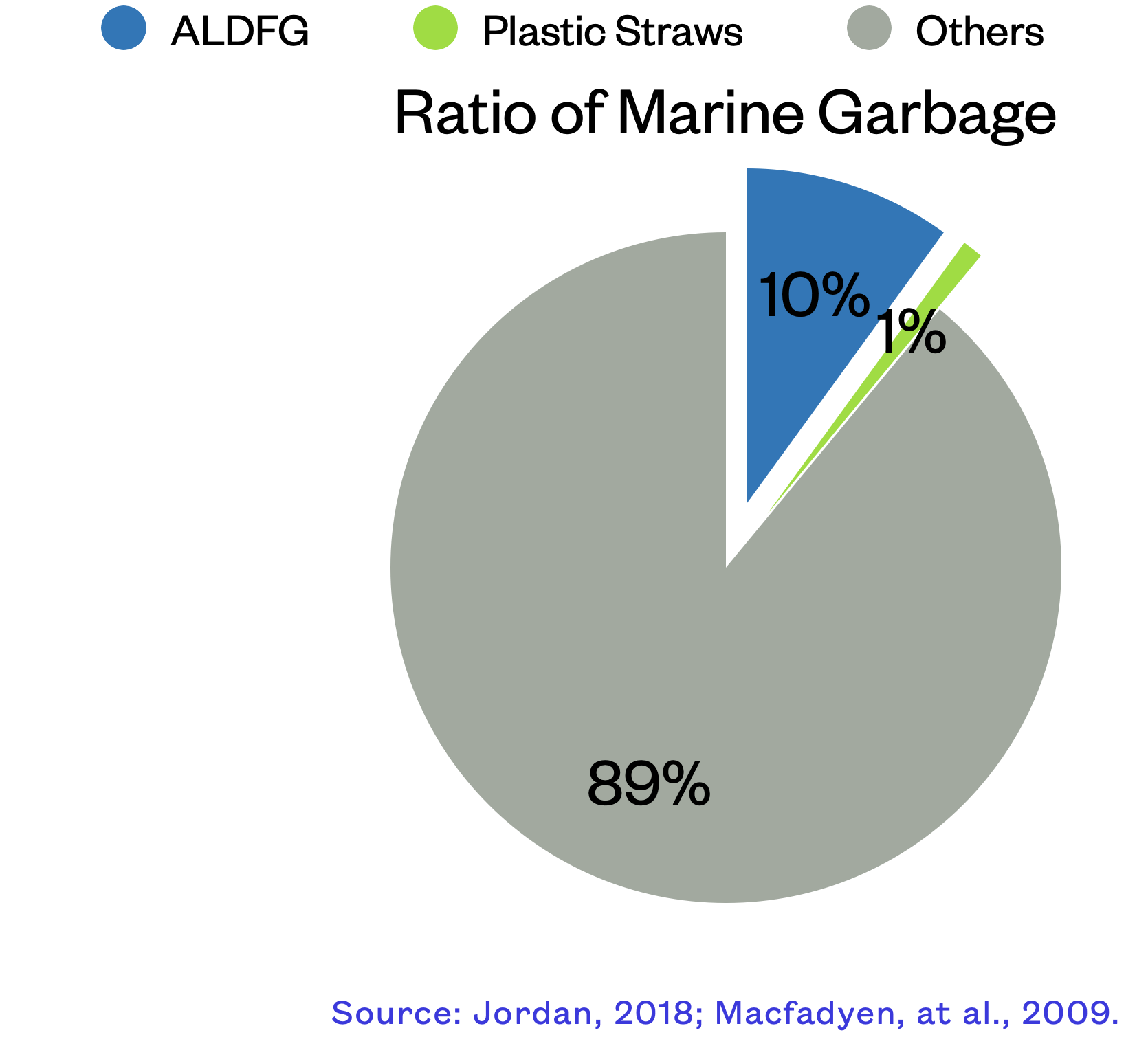
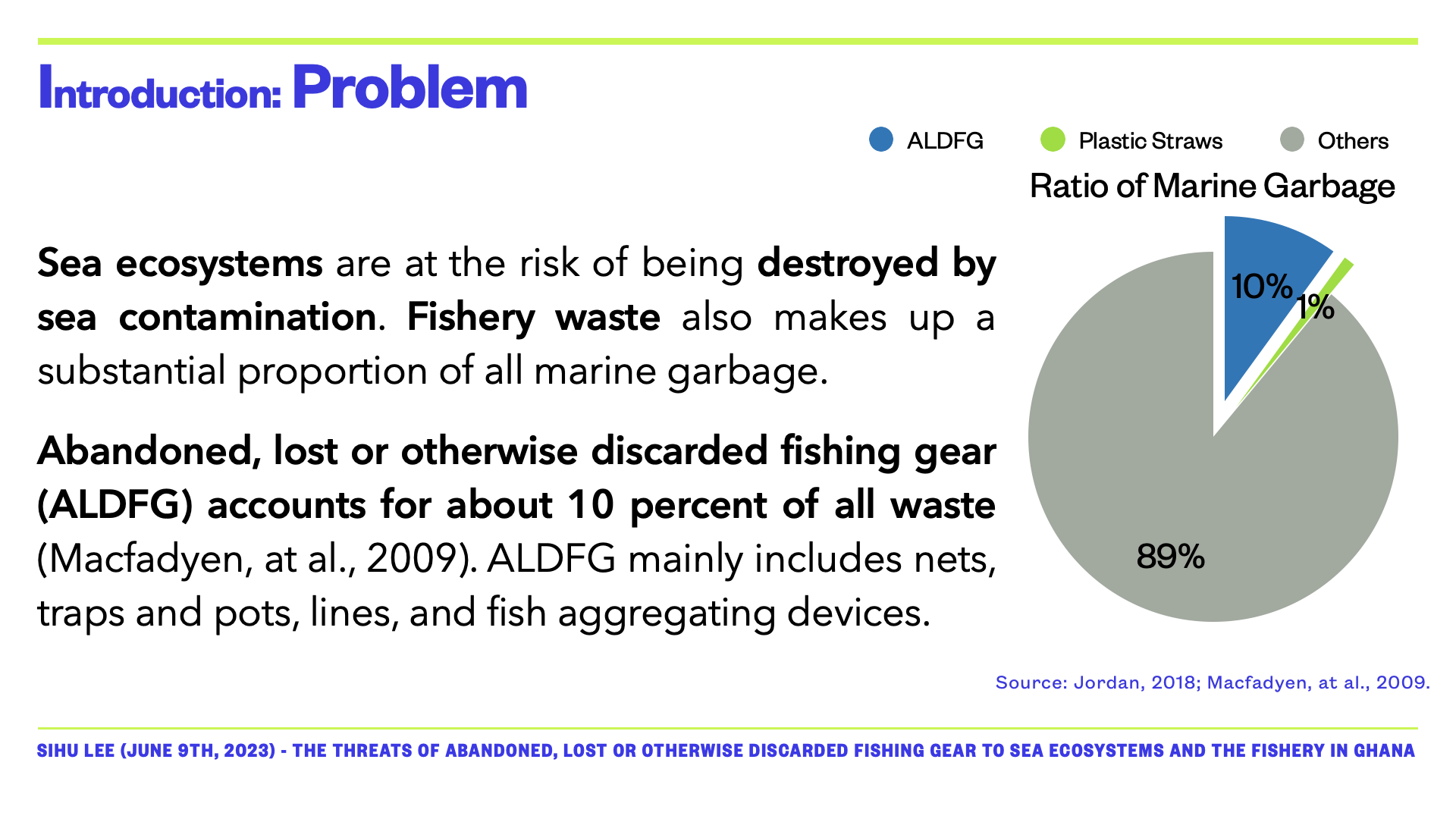
Sea ecosystems are at the risk of being destroyed. Plastic garbage is often cited as the principal cause of sea contamination which results in the unnecessary death of marine life. It is true that plastic garbage counts for considerable amounts of marine garbage — about 80% of total (Fava, 2022). Given that 50% of all plastics produced each year are made as single-use products (Recycle Track Systems, 2022), plastic products used for daily purposes, especially plastic straws, have become a major issue in addressing plastic pollution. However, not only do these daily use products contribute to the problem, but fishery waste also makes up a substantial proportion of all waste. While plastic straws are only a tiny fraction of the problem – less than 1 percent (Jordan, 2018), abandoned, lost or otherwise discarded fishing gear (ALDFG) accounts for about 10 percent of all waste (Macfadyen, at al., 2009).
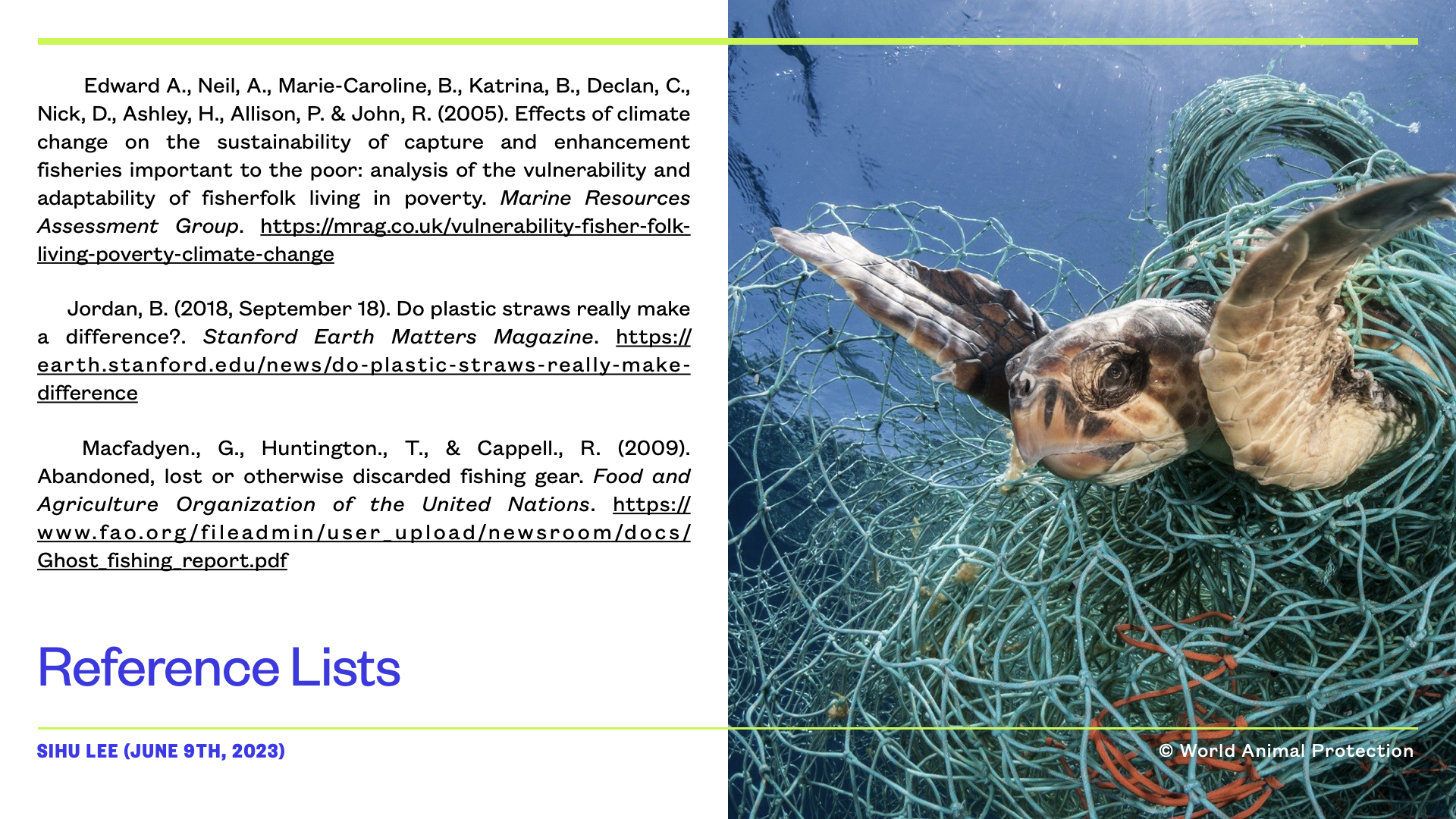
ALDFG mainly includes nets, traps and pots, lines, and fish aggregating devices (FADs). Such waste originating from commercial fisheries results in killing ocean creatures, damage to their habitats, and decreased fishery outputs (Karli at al, 2019). For example, according to The SeaDoc Society, just one abandoned net was estimated to have killed almost $20,000 worth of Dungeness crab over 10 years. Between 2002 and 2010, Washington State recovered 870 nets and reported more than 32,000 marine animals trapped in the discarded nets (Gould, 2015). Regarding concerns about African fishery, marine garbage has been reported to have increased in Ghana since 2017. The fact makes the problem of ALDFG particularly critical, considering most of the small-scale fisheries in Ghana use monofilament nets made of plastic (Bana, 2022). As plastic-made fishing gear slowly breaks down over time, it has the potential to introduce microplastics in the environment and eventually into the food chain (Randall, 2020). Also, trawls can smother the benthos and damage fragile habitats such as coral reefs, while longlines can become entangled or the hooks may have an impact on seabirds (Macfadyen, at al., 2009).
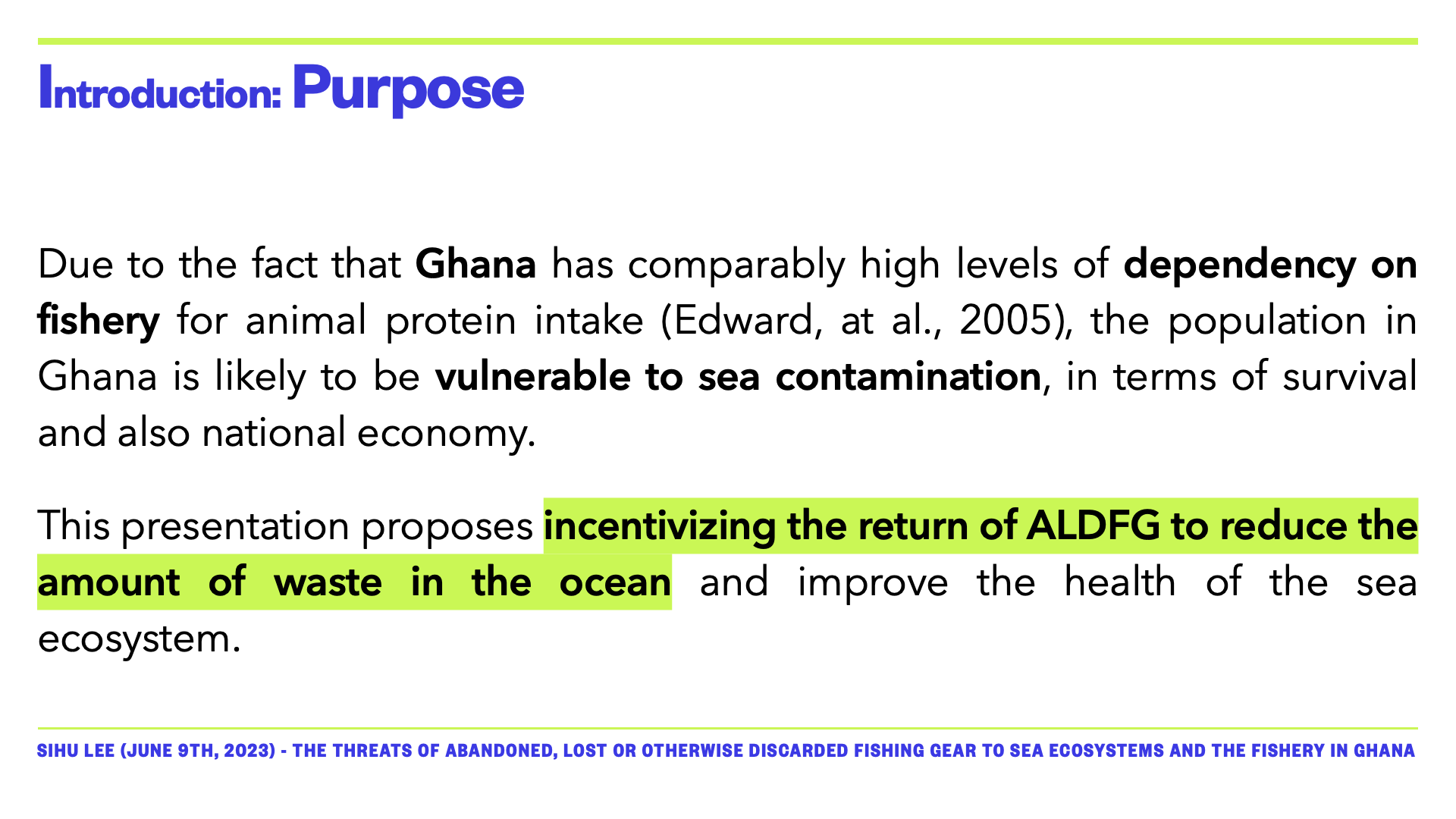
Although the problem of sea ecosystem destruction has adverse effects worldwide, there are specific populations that are remarkably vulnerable to the problem. Researchers from the Marine Resources Assessment Group (MRAG, 2005) calculated per capita consumption and the proportional contribution of fish to total animal protein intake, scaled to 100 (highest level of dependence). While the Maldives have the highest level of dependency on fishery (index=100), countries along the West African coastal have comparably high levels of dependency, including Ghana (index=79) and countries that scored over 60 points — Sierra Leone, Gambia, and São Tomé and Príncipe. The people in these countries are likely to be highly affected by sea contamination, in terms of survival and also national economy.
Action Plan
Access to clean and sufficient provisions from the environment is a universal right. Unfortunately, some populations in certain regions have less access to such resources. Economic capacity is one of the leading indicators of this disparity, as it determines a country’s ability to cultivate its environment and provide adequate food supplies, leading to regional or national gaps in food supply. For example, economically impoverished countries that rely on fisheries — for example, Ghana is particularly vulnerable to this issue (MRAG, 2005) — are particularly vulnerable to environmental damage caused by sea waste. This situation is often exacerbated by other countries that contribute to sea pollution with considerable amounts of waste. To make the fishery in such countries more productive and significantly enhance the lives of their people, it is crucial to provide a clean sea environment. This action plan proposes incentivizing the return of lost or discarded fishing gear (ALDFG) to reduce the amount of waste in the ocean and improve the health of the sea ecosystem.
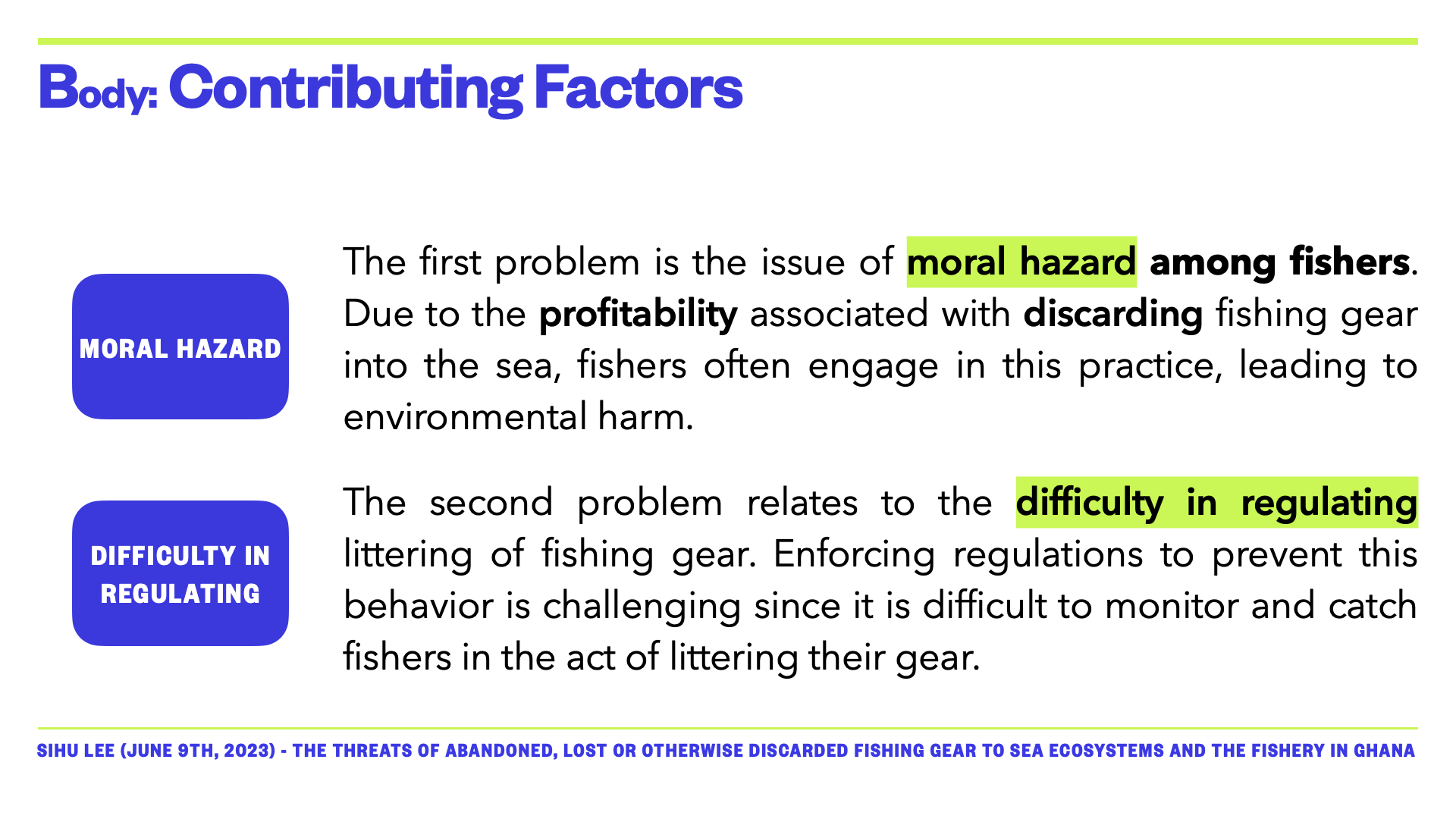
Lost or otherwise discarded fishing gear (ALDFG) is a significant contributor to sea pollution, accounting for approximately 10 percent of all waste (Macfadyen at al, 2009). While plastic straws have received a lot of attention for their environmental impact along with other daily use plastic products, they account for less than 1 percent of the problem (Jordan, 2018). Although reducing ALDFG would surely make the sea ecosystem healthier, regulating littering fishing gear is a tough task as it is very challenging to catch the moment of littering. Therefore, the reduction process should be incentivized. Countries should offer incentives to fishers who return used or damaged fishing gear.
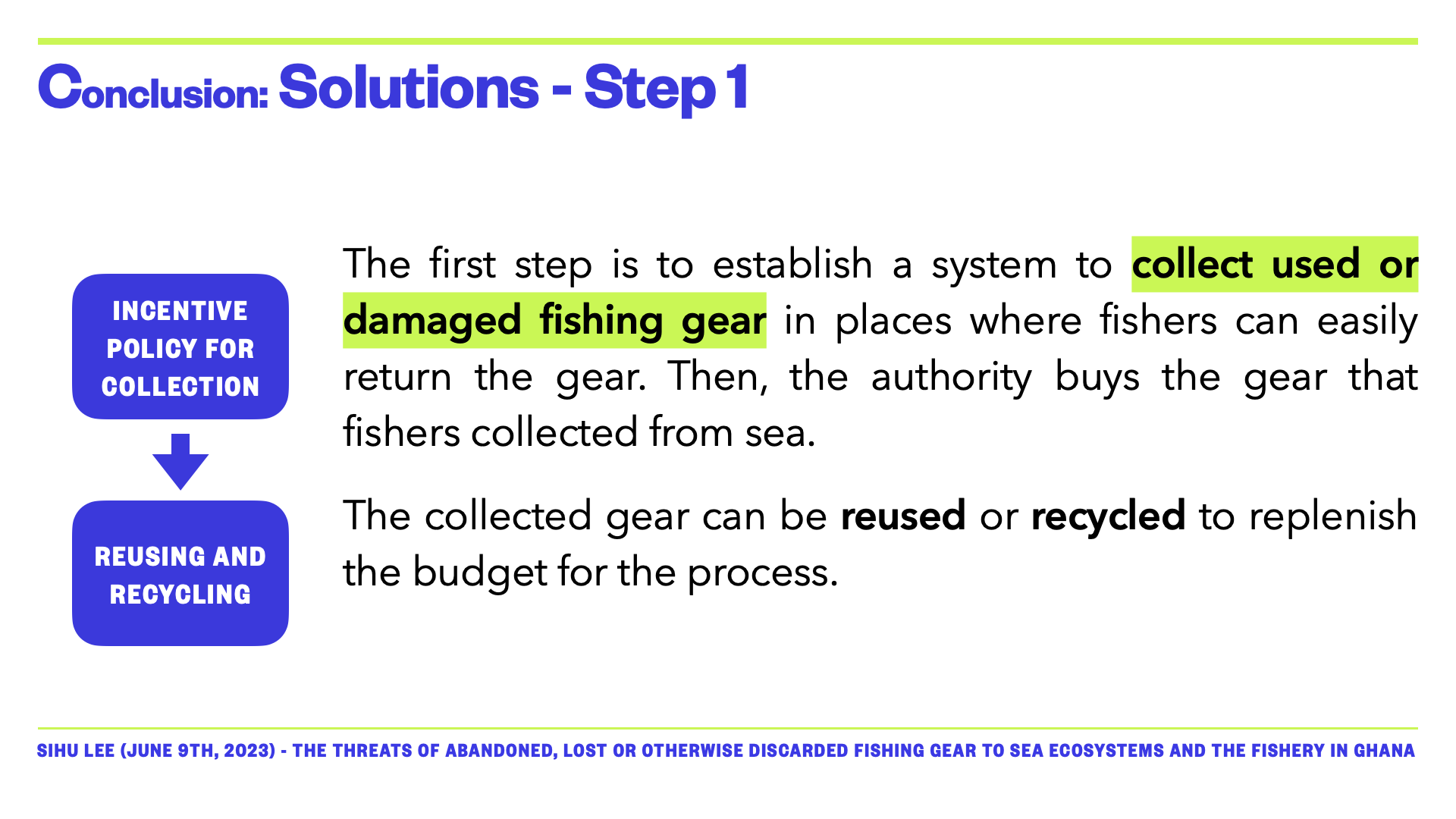
The first step in enforcing the incentive policy is to design and establish a system to collect used or damaged fishing gear. This system should be set up in coastal areas and ports where fishers can easily return the gear. The collected gear can then be reused or recycled to replenish the budget for the process. It is essential to communicate this system effectively to the fishers to ensure their active participation.
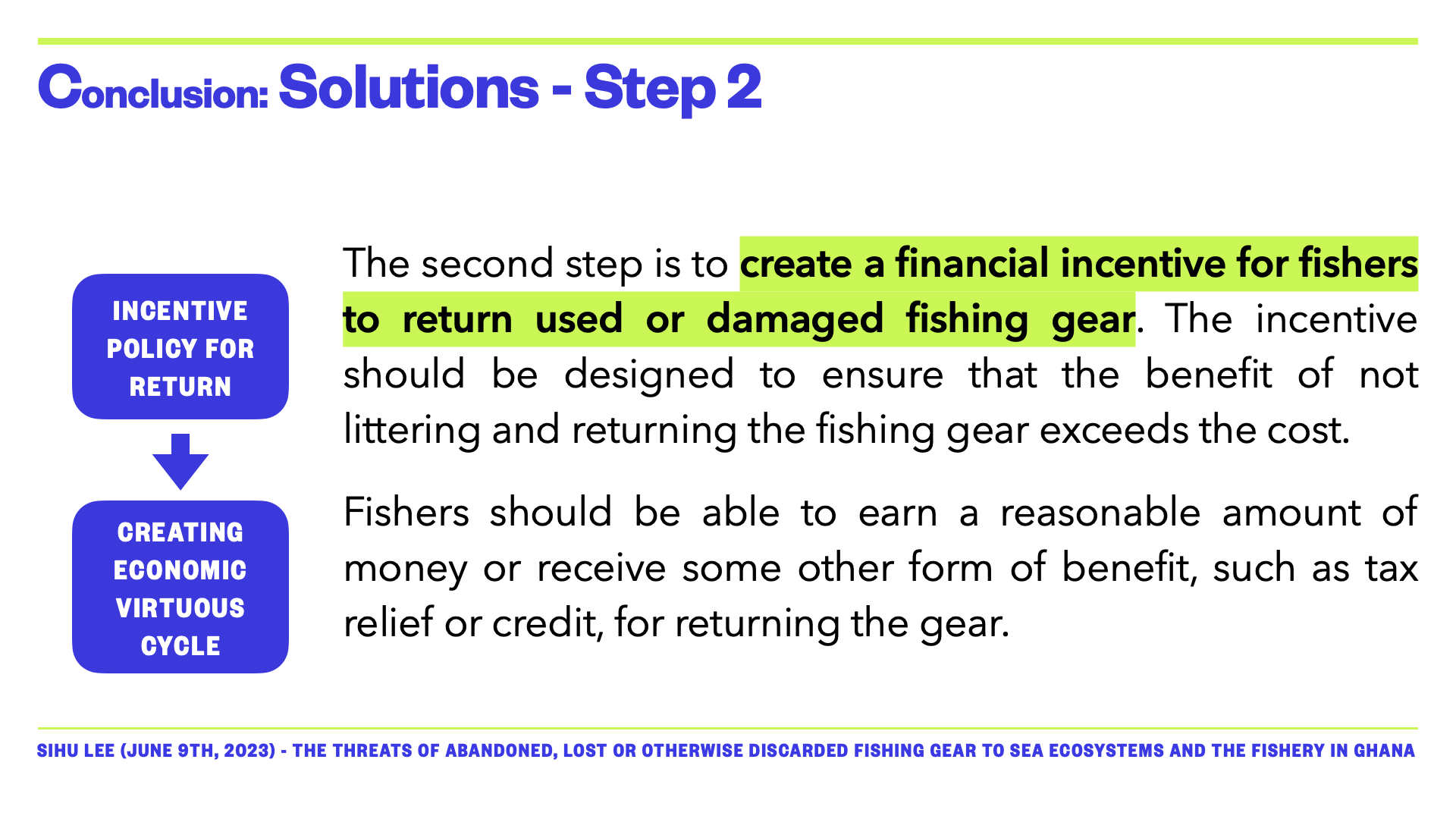
The second step is to create a financial incentive for fishers to return used or damaged fishing gear. The incentive should be designed to ensure that the benefit of not littering and returning the fishing gear exceeds the cost. Fishers should be able to earn a reasonable amount of money or receive some other form of benefit, such as tax relief or credit, for returning the gear. This incentive will encourage fishers to participate in reducing ALDFG and improving the sea ecosystem.
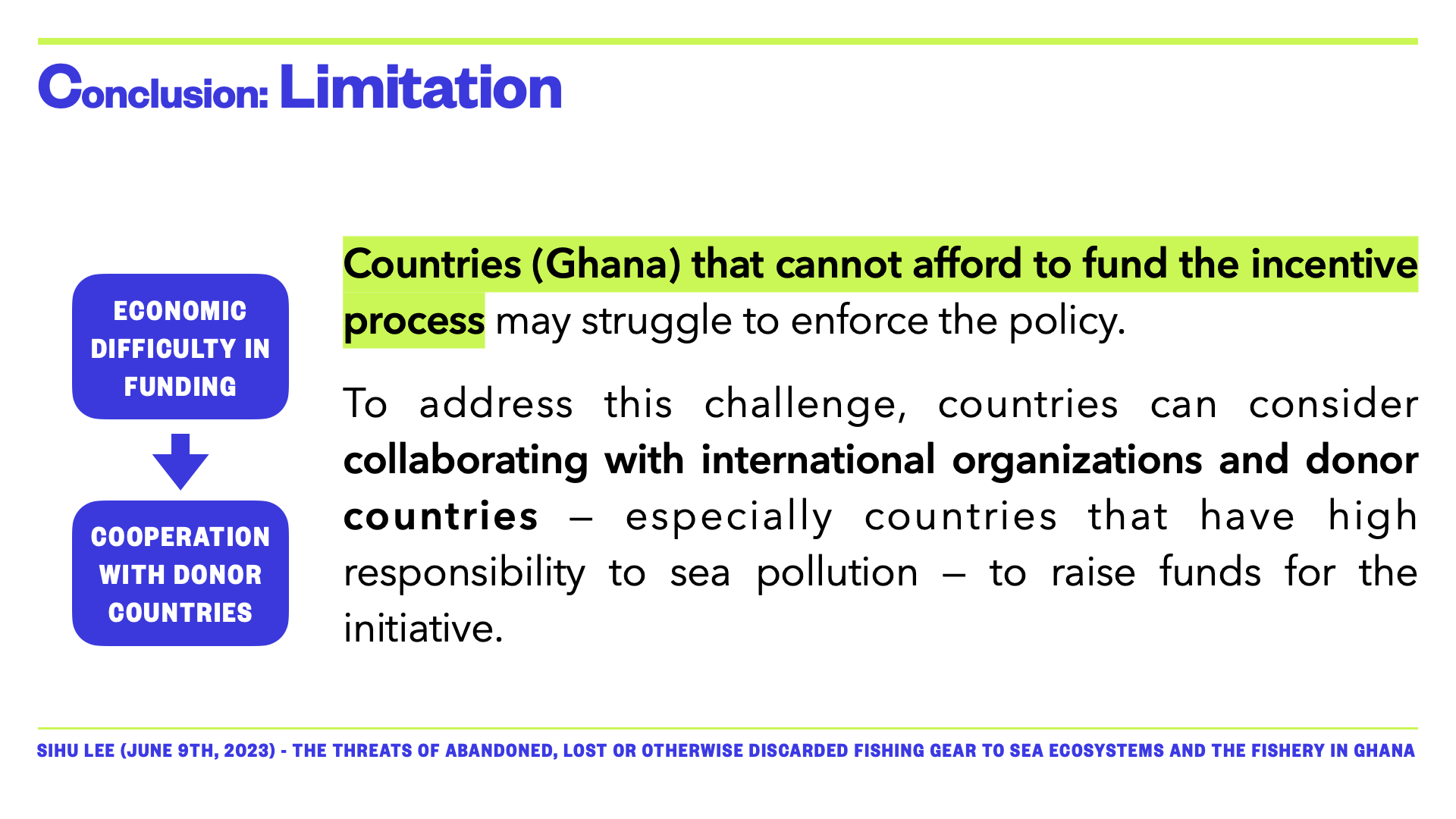
However, countries that cannot afford to fund the incentive process may struggle to enforce the policy. To address this challenge, countries can consider collaborating with international organizations and donor countries — especially countries that have high responsibility to sea pollution would be also responsible to donate for the sea purification — to raise funds for the initiative. The funding can be used to provide financial incentives for fishers to return used or damaged fishing gear and establish a system to collect and recycle the gear. Meanwhile, considering that most fisheries production is allocated to semi-developed or developed countries like China, India or the United States (The World Bank, 2016), this problem may occur as frequently.Another challenge is creating awareness and ensuring active participation from fishers. Effective communication and awareness campaigns are crucial to ensure that fishers understand the benefits of returning used or damaged fishing gear and actively participate in the process. Governments can work with non-governmental organizations (NGOs) and community-based organizations to create awareness campaigns and educate fishers on the importance of returning used or damaged fishing gear. Local newspapers and businesses that are popular to fishers (like a fishing shop, a boat or fishing gear repair shop or a local restaurant) can be also nice place to advertise the policy.
Ultimately, reducing ALDFG is crucial to improving the health of the sea ecosystem and providing a decent food supply for people who depend on fisheries for their livelihood. Governments and policymakers can enforce the policy by creating a system to collect used or damaged fishing gear, creating financial incentives for fishers who return used or damage fishing gear, and ensuring active participation from fishers.
Reference List
Bana, L. (2022). The global menace of “Abandoned, Lost or Otherwise Discarded Fishing Gear” (ALDFG): best practice to manage ALDFG in Ghana’s fisheries sector. World Maritime University. https://commons.wmu.se/cgi/viewcontent.cgi?article=3146&context=all_dissertations
Edward A., Neil, A., Marie-Caroline, B., Katrina, B., Declan, C., Nick, D., Ashley, H., Allison, P. & John, R. (2005). Effects of climate change on the sustainability of capture and enhancement fisheries important to the poor: analysis of the vulnerability and adaptability of fisherfolk living in poverty. Marine Resources Assessment Group. https://mrag.co.uk/vulnerability-fisher-folk-living-poverty-climate-change
Fava, M. (2022, May 9). Ocean plastic pollution an overview: data and statistics. Unesco. https://oceanliteracy.unesco.org/plastic-pollution-ocean/
Gould, H. (2015, September 10). Hidden problem of 'ghost gear': the abandoned fishing nets clogging up oceans. The Guardian. https://www.theguardian.com/sustainable-business/2015/sep/10/fishing-industry-vows-to-tackle-wildlife-deaths-from-ghost-gear
Jordan, B. (2018, September 18). Do plastic straws really make a difference?. Stanford Earth Matters Magazine. https://earth.stanford.edu/news/do-plastic-straws-really-make-difference
Karli, T., Dorey, C., & Obaidullah, S. (2019). Ghost Gear: The Abandoned Fishing Nets Haunting Our Oceans. Greenpeace. https://www.greenpeace.org/static/planet4-korea-stateless/2019/11/775d84ea-ghostgearfishingreport2019_greenpeace.pdf
Macfadyen., G., Huntington., T., & Cappell., R. (2009). Abandoned, lost or otherwise discarded fishing gear. Food and Agriculture Organization of the United Nations. https://www.fao.org/fileadmin/user_upload/newsroom/docs/Ghost_fishing_report.pdf
Peter, R. (2020). South African Marine Fisheries and Abandoned, Lost and Discarded Fishing Gear. Commonwealth Litter Programme from Cefas (Centre for Environment Fisheries & Aquaculture Science).
Total Fisheries Production (metric tons). (2016). The World Bank. https://data.worldbank.org/indicator/ER.FSH.PROD.MT?end=2016&most_recent_value_desc=true&start=1960&view=chart&year_high_desc=true
May 27, 2023
© Lee Sihu (keepedia06@gmail.com)
'경제' 카테고리의 다른 글
| 일본 하츠모데(初詣)의 국내 로컬라이징 가능성 (0) | 2024.08.07 |
|---|---|
| 도함수를 활용한 단기투자 ‘마트단타’의 실용성 분석 (1) | 2023.12.14 |
| Naver Data Lab Analysis and Fluctuation in KOSPI (0) | 2023.07.02 |
| 경제안전보장추진법…반도체 산업에 대한 일본의 경제안보 전략 및 시사점 (0) | 2023.04.11 |
| Interest Rate, Is It Okay to Keep Rising? (0) | 2023.04.02 |


